
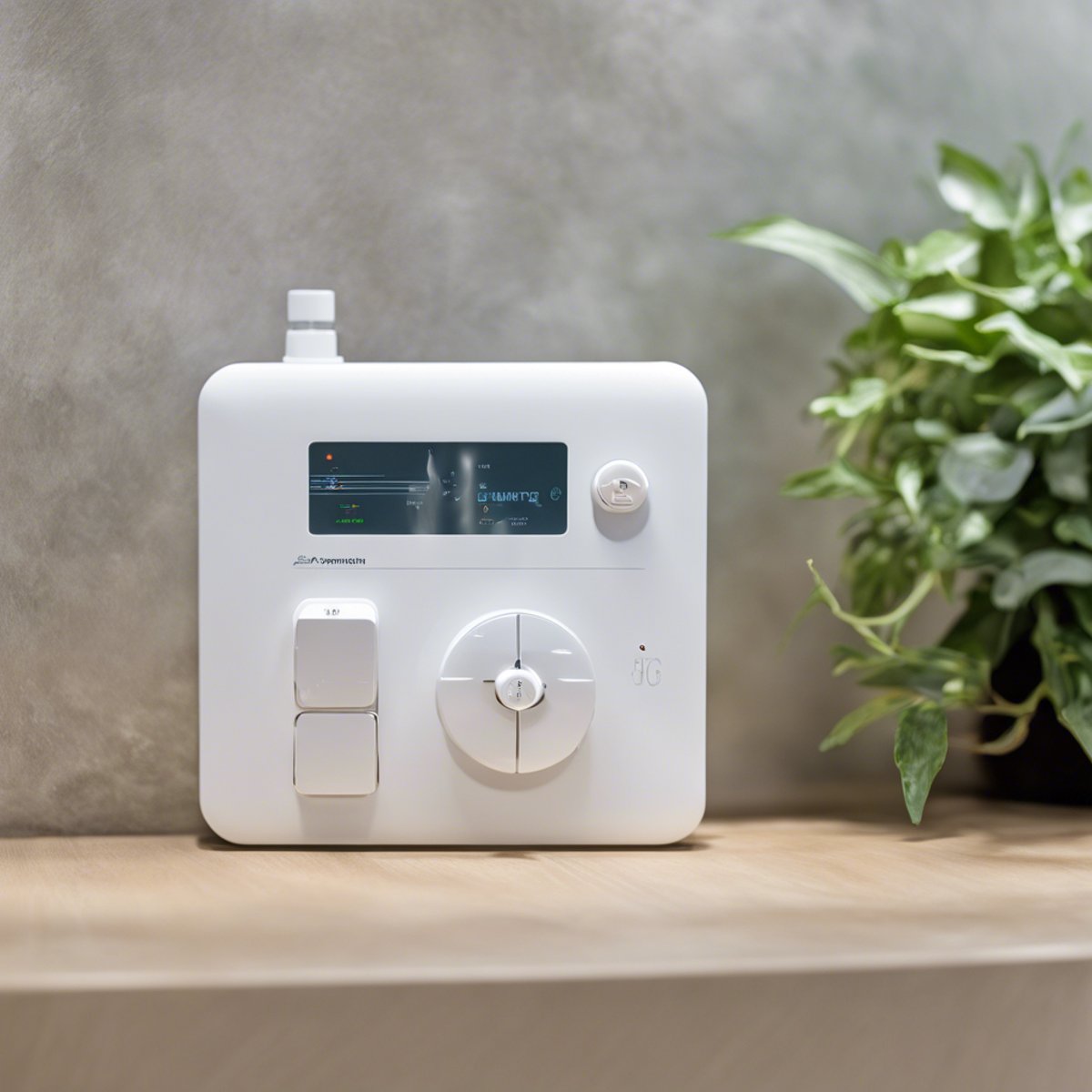
An overhead water tank is one of the simplest pieces of infrastructure in a home or building, and one of the easiest to manage badly. Someone switches the motor on, gets distracted, and either floods the terrace with overflow or — worse — leaves the motor running after the source runs dry. An automatic, app-controlled water level system removes that guesswork entirely, and the technology behind it is simpler than most people expect — one of the easiest ways to save water at home without changing daily habits.
How motor-level sensors work
At the core of the system is a level sensor mounted inside or alongside the tank — commonly an ultrasonic, float, or probe-based sensor that continuously measures how full the tank is. That reading feeds into a small controller wired to the motor's power supply. When the water level drops below a configured threshold, the controller switches the motor on automatically; when the tank reaches full, it switches the motor off. No manual monitoring, no mental math about how long the motor has been running.
Most systems also include a dry-run cutoff at the source — the sump, borewell, or municipal supply line — so if the source itself runs low or empty, the motor shuts off rather than continuing to run dry.
The benefits
Three things change once level sensing takes over from manual switching:
No overflow
The most obvious saving: tanks stop overflowing onto rooftops and terraces because someone forgot to check. That alone can be the single largest source of accidental water waste in a building with manual motor control.
No dry-run motor damage
Motors that run without water intake overheat and wear out fast — dry-running is one of the most common causes of early motor failure. Automatic cutoffs stop the motor the moment the source runs low, protecting equipment that's often expensive and inconvenient to replace.
Remote monitoring and control
A connected system reports tank levels and motor status to a mobile app, so you can check in from anywhere and override automatic control manually if needed — useful during scheduled water-supply windows or power cuts, when timing the motor matters more than usual.
Use cases: homes vs. societies and commercial buildings
For a single home, the value is mostly convenience and protection — no more running upstairs to check the tank, and no motor burnout from an unnoticed dry run. For housing societies, commercial buildings, and hotels, the stakes are higher: multiple tanks, more people relying on consistent supply, and a much bigger cost if a motor fails or water is wasted at scale. Facility staff benefit from a single dashboard view across multiple tanks instead of manually inspecting each one, and residents get more consistent supply without depending on someone remembering to run the pump on schedule.
The two contexts also differ in what "failure" looks like. In a home, a missed overflow means a wet terrace and a higher water bill. In a society or commercial building with several tanks feeding different blocks or floors, an unmanaged tank can mean some units get no water at all while others overflow — a supply and fairness problem, not just a wastage one. Centralized monitoring turns that into a solvable problem instead of a recurring complaint.
What installation actually involves
Fitting a level-sensing system doesn't usually mean re-plumbing anything. The sensor mounts on or in the existing tank, the controller wires into the existing motor circuit, and the app connects over Wi-Fi or a mobile data connection depending on the site. For most homes this is a same-day installation. For sites with multiple tanks — say, a housing society with a sump and several overhead tanks — the rollout is really just the same single-tank installation repeated per tank, all reporting into one dashboard.
How h2osave's system fits in
Our Smart Water Management System follows this same model — automatic level sensing, motor control, and dry-run protection, paired with a mobile app for remote visibility. It's designed to install onto an existing tank and motor setup without major plumbing changes, so it works as a retrofit for homes as easily as it does for larger sites managing multiple tanks. If overflow, motor damage, or inconsistent supply have been a recurring headache, this is usually the fastest fix available. For the cost side of the same system, see our piece on how a smart water management system saves you money.
Curious whether it fits your setup? See the Smart Water Management System.